
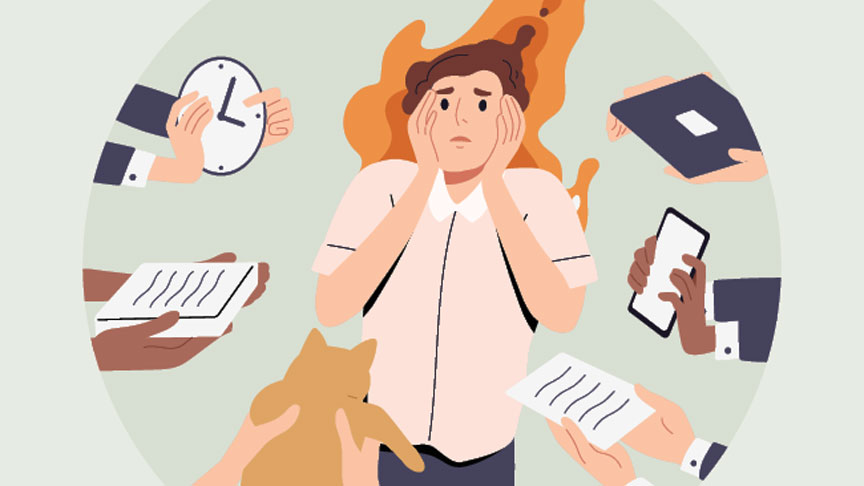
Why You Feel Emotionally Exhausted All the Time (Even When You’re Doing Nothing)
Have you ever ended the day feeling completely drained, even though, on paper, you didn’t really do much? No long workday, no major events… yet your mind feels foggy, your body feels heavy, and even small tasks feel overwhelming. This isn’t laziness or a lack of motivation. It’s emotional exhaustion, and it often runs much deeper than people realize.
Emotional exhaustion doesn’t always come from what you do; it often comes from what your mind is constantly processing in the background. Even when you’re sitting still, your brain may be replaying conversations, anticipating worst-case scenarios, criticizing yourself, or holding onto unresolved pain. This invisible mental load quietly drains your energy over time, leaving you feeling depleted without a clear explanation.
Anxiety is one of the biggest contributors to this kind of exhaustion. It keeps your mind in a constant state of alertness, always scanning for danger or preparing for what could go wrong. Anxiety is the fear of something that may or may not happen that always ruins your today. Even when nothing is happening externally, your body may feel restless, on edge, and unable to fully relax. Over time, this chronic state of activation wears you down. One helpful CBT tool for anxiety is thought challenging. When your mind jumps to worst-case scenarios, try writing the thought down, examining the evidence for and against it, and replacing it with something more balanced, such as: “I feel anxious, but that doesn’t mean I’m in danger.” Another way you can challenge your anxious thoughts is after you think of worst-case scenarios, you will force yourself to think of the best-case scenarios. Lastly, you bring both of those contradicting ideas to the middle of the spectrum to the most probable scenario. When anxiety feels intense in your body, DBT skills like TIPP can help regulate your system more quickly by calming your physical response. TIPP stands for:
Temperature: Splash cold water on your face
Intense Exercise: 30–60 seconds of jumping jacks
Paced Breathing: Slow your breath (inhale 4, exhale 6)
Paired Muscle Relaxation: Tense your muscles when breathing in, and Breath out when relaxing your muscles
These techniques quickly calm your nervous system when anxiety spikes.
Depression, on the other hand, often feels like a heavy weight you can’t explain. It can drain your energy, reduce motivation, and leave you feeling emotionally flat or disconnected. Even simple tasks can feel overwhelming, not because you’re not trying, but because your system is depleted. Instead of waiting to feel motivated, CBT encourages behavioral activation: choosing one small, manageable task and completing it regardless of how you feel. Similarly, DBT’s opposite action skill helps you gently move against the urge to withdraw, encouraging small steps toward engagement rather than isolation.
Burnout is another layer that often goes unnoticed. It doesn’t just come from work; it can come from caregiving, emotional labor, or trying to hold everything together for too long. When your output has exceeded your capacity without enough recovery, you may start to feel detached, irritable, and chronically exhausted. Burnout is often fueled by internal pressure and “should” statements, like “I should be able to handle this” or “I can’t let anyone down.” CBT helps you reframe these thoughts into something more realistic and compassionate. DBT complements this with PLEASE skills, which focus on taking care of your physical well-being because your body and mind are deeply connected. PLEASE stands for: Physical health (treat illness), Low substances (reduce alcohol/drugs), Eating balanced meals, Avoid sleep deprivation, Sleep hygiene, Exercise. Burnout isn’t just mental—it’s physical, too.
Trauma can also play a powerful role in emotional exhaustion, even if it’s not immediately obvious. Sometimes trauma lives quietly in the nervous system, keeping your body in a state of survival mode. This can show up as numbness, feeling on edge, strong reactions to small triggers, or deep fatigue without a clear cause. Grounding techniques, such as the 5-4-3-2-1 exercise, can help bring your mind back to the present moment. 5-4-3-2-1 grounding exercise is working on tagging our automatic senses into manuals. Say and describe the following: 5 things you can see, 4 things you can feel, 3 things you can hear, 2 things you can smell
1 thing you can taste. DBT self-soothing skills: Use your senses to create a feeling of safety in your body. Wrap yourself in a soft blanket, listen to calming music, smell your favorite scent, and make a warm drink. This signals safety to your nervous system.
When anxiety, depression, burnout, or trauma are present, your system is never truly at rest. That’s why doing “nothing” can still feel exhausting. You’re not actually doing nothing; your mind and body are working hard behind the scenes to manage thoughts, emotions, and stress responses.
What you need isn’t just more rest, it’s the right kind of support. Emotional exhaustion often improves when you begin to address both your thoughts and your nervous system. This might include:
Becoming aware of your internal patterns
Using tools to regulate your body and emotions
Setting boundaries to reduce overload
Processing thoughts and experiences instead of holding them in
Practicing self-compassion instead of self-criticism
If you feel emotionally exhausted all the time, it doesn’t mean you’re weak. It means something in your internal world is asking for attention. Your exhaustion is not a failure; it’s information. And when you begin to respond to it with the right tools and support, you can start to feel relief, clarity, and energy return. One small step at a time.