
Do you ever feel like your body reacts before your mind can catch up? Nightmares that won’t stop replaying. A racing heart for no clear reason. Feeling on edge, shut down, or emotionally flooded, sometimes all at once.
For many people living with trauma or PTSD, these symptoms aren’t signs of weakness. They’re signs that the nervous system is still stuck in survival mode. Trauma doesn’t just live in our memories; it lives in our bodies, shaping how we respond to the world long after the danger has passed.
If traditional talk therapy hasn’t fully eased these symptoms, there is another evidence-based approach that may help: Eye Movement Desensitization and Reprocessing (EMDR). EMDR works differently, by helping the brain and body process trauma in a way that feels less overwhelming and more healing.
What Is It and the Benefits of EMDR Therapy.
Eye Movement Desensitization and Reprocessing (EMDR) therapy is a groundbreaking, evidence-based approach for addressing trauma and post-traumatic stress disorder (PTSD). One of the primary benefits of EMDR is its ability to help individuals process distressing memories while reducing their emotional charge.
This process involves the patient briefly recalling traumatic events while simultaneously engaging in bilateral stimulation; most commonly through guided eye movements, tapping, or auditory tones. This dual-attention process allows the brain to reprocess memories that were previously “stuck,” helping them move from a state of emotional reactivity to one of adaptive resolution. Over time, this reprocessing diminishes the vividness and emotional intensity associated with traumatic memories.
As a result, many individuals experience a significant reduction in trauma-related symptoms such as anxiety, nightmares, intrusive thoughts, and flashbacks. Additionally, EMDR is often a more time-efficient treatment compared to traditional talk therapies, making it an effective option for individuals seeking relief from the long-lasting effects of trauma.
What to Expect
Trauma is an emotional response to a deeply distressing or disturbing event that overwhelms an individual’s ability to cope. It can stem from a wide range of experiences, including accidents, natural disasters, abuse, neglect, or violence. When trauma is not fully processed, it may lead to symptoms such as emotional numbing, hyper-vigilance, intrusive memories, and difficulty regulating emotions.
EMDR therapy is designed to specifically target these symptoms by helping the brain process traumatic memories in a safe, structured, and controlled environment. The EMDR process typically begins with an assessment phase, during which the therapist gathers information about the patient ’s history, strengths, and treatment goals. Together, the therapist and patient identify specific memories, beliefs, and emotional patterns to target during treatment.
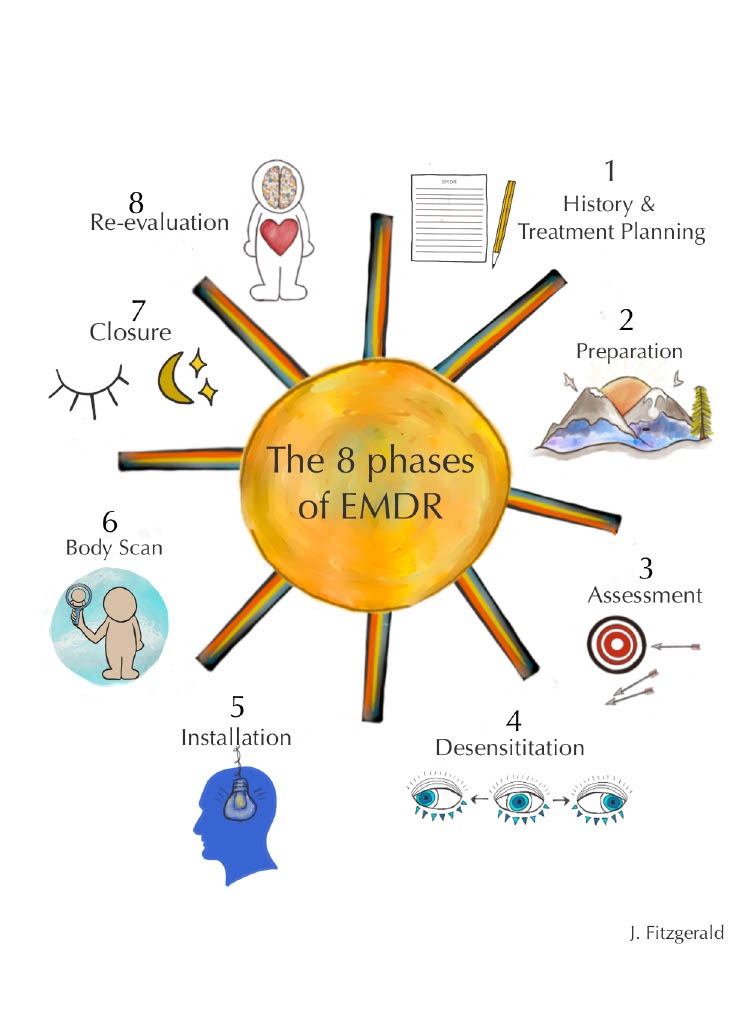
EMDR follows a structured eight-phase protocol, which includes history-taking, preparation, assessment, desensitization, installation, body scan, closure, and reevaluation. Throughout these phases, bilateral stimulation is used to support the brain’s natural healing processes. As treatment progresses, patients often report decreased distress, increased emotional regulation, and improved overall well-being.
Application Activity: Experiencing Bilateral Stimulation
To truly understand how EMDR helps calm the nervous system and support emotional processing, it can be helpful to gently experience a form of bilateral stimulation for yourself. The following activity offers a simple, safe introduction to what this process can feel like. This can help readers experientially understand how bilateral stimulation can support regulation and present-moment awareness.
This brief exercise offers a simple, non-clinical introduction to one component of EMDR therapy. It is not intended to process trauma or replace therapy.
Instructions (2–3 minutes):
- Get comfortable.
Sit with both feet on the floor or in a relaxed position. Allow your body to settle. - Choose a neutral or mildly pleasant focus.
This could be a calm image, a sense of steadiness in your body, or your breathing. Avoid focusing on distressing memories. - Begin bilateral stimulation.
Slowly alternate tapping your left and right thighs or hands at a steady, gentle pace (about once per second). - Notice without judgment.
As you continue for 20–30 seconds, simply notice any changes in your body, breathing, or emotional state. - Pause and reflect.
Stop tapping and take a slow breath. Ask yourself:- What do I notice now?
- Do I feel more grounded, relaxed, or neutral?
Reflection:
Even subtle shifts can highlight how the body and brain respond to rhythmic, alternating stimulation.
Clinical Context
In EMDR therapy, bilateral stimulation is carefully paired with guided memory processing to help individuals reprocess traumatic experiences that were once overwhelming. This brief activity offers a glimpse into how EMDR supports nervous system regulation and integration, key foundations of trauma recovery.
Healing Is Possible!
Living with trauma can feel exhausting, confusing, and isolating, but healing does not require reliving the pain alone or endlessly talking about the past. EMDR offers a structured, research-supported way to help the brain do what it naturally wants to do: heal.
Whether you’re struggling with PTSD, recurring nightmares, anxiety linked to past experiences, or emotional triggers that seem to come out of nowhere, EMDR may offer a path forward. Healing doesn’t mean forgetting what happened; it means gaining freedom from how it continues to affect you.
If you’re curious about EMDR, consider speaking to one of our trained EMDR therapists here at Magnolia Therapy Group, who can help determine if this approach is right for you. Your experiences are valid, your symptoms make sense, and relief is possible.